

Become the Only Candidate They Want to Hire
Why Apply to Fewer Jobs?

Here’s something that feels backwards but actually works: the fewer jobs you qualify for, the more interviews you’ll get.
I know. Sounds wrong. Let me explain.
The Problem With Being “Good at Everything”
You’ve probably seen resumes like this. Maybe yours looks like this too.
Seven programming languages. Twenty frameworks. “Full stack developer” in the headline. Experience with... basically everything.
Here’s what happens when a hiring manager sees that: they don’t believe you.
Nobody is genuinely great at Python AND Java AND JavaScript AND Go AND Rust. Nobody masters React AND Angular AND Vue AND Svelte. When you list everything, you prove nothing.
And there’s a bigger problem. When you’re “good at everything,” you’re competing with everyone. Every single developer on the market is your competition.
But when you’re the “React developer who specializes in e-commerce checkout flows”? Now you’re competing with maybe 50 people instead of 50,000.
Why Specialists Win
Think about it this way.
You need heart surgery. Do you want the general surgeon who “knows a bit about hearts” or the cardiac surgeon who’s done 2,000 heart operations?
Companies think the same way. They have a specific problem. They want someone who’s solved that exact problem before. Not someone who’s “pretty good at lots of stuff.”
Here’s the math that matters:
Generalist applies to 1,000 jobs. Gets 10 callbacks. That’s 1%.
Specialist applies to 30 jobs. Gets 15 callbacks. That’s 50%.
The specialist has fewer options but way better odds. And they’re not exhausted from sending out hundreds of applications that go nowhere.
How to Pick Your Niche (Practical Steps)
Step 1: Pick a side of the stack
This is the bare minimum. You need to be one of these:
Frontend developer
Backend developer
DevOps/Platform engineer
Data engineer
ML/AI engineer
Mobile developer
Embedded systems engineer
“Full stack” is not a specialization. It’s the absence of one. If you’re truly full stack, pick the side you’re stronger at and lead with that.
Step 2: Pick your primary language and framework
Within your stack choice, get specific:
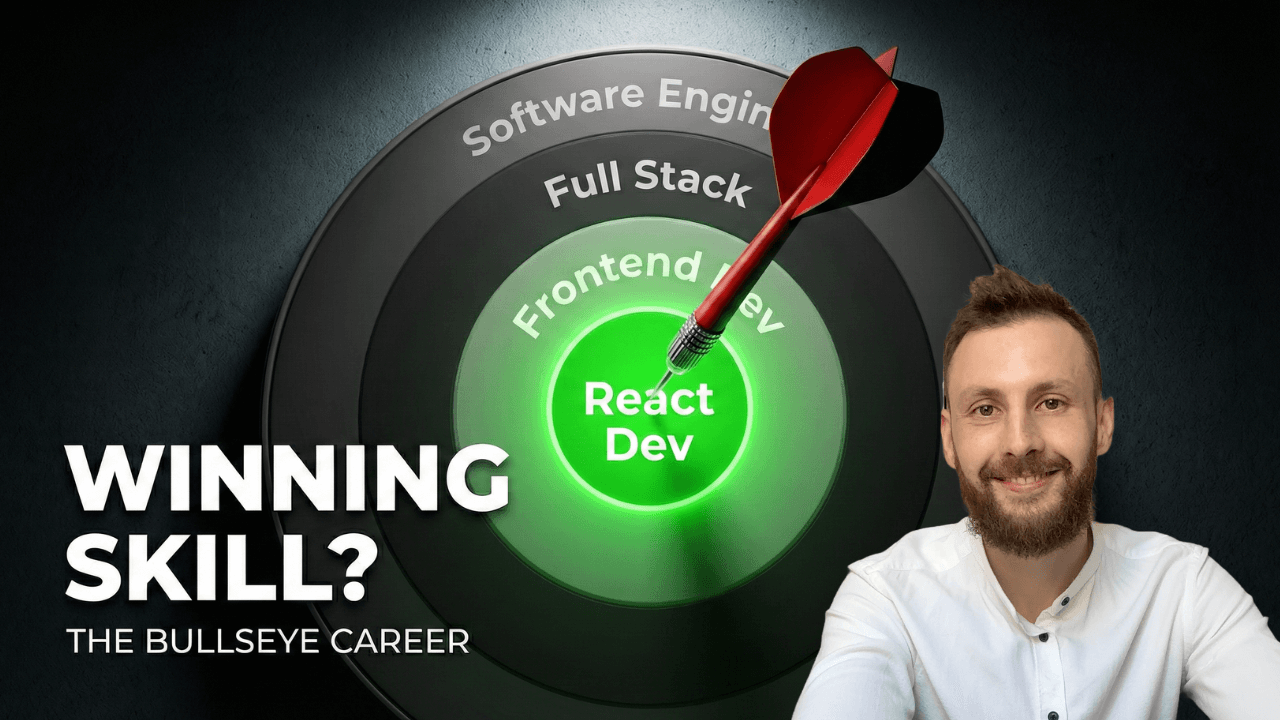
Not “frontend developer” → “React developer”
Not “backend developer” → “Python/Django developer”
Not “DevOps engineer” → “Kubernetes and AWS specialist”
One language. One or two frameworks. That’s your core identity.
Step 3: Add an industry or domain (optional but powerful)
This is where it gets really good:
“React developer” → “React developer for fintech applications”
“Python backend developer” → “Python developer for data pipelines”
“Mobile developer” → “iOS developer for healthcare apps”
The more specific you get, the less competition you have.
Step 4: Update everything to match
Once you’ve picked your niche, make it obvious everywhere:
LinkedIn headline: Not “Software Engineer” but “Senior React Developer | Building Scalable E-commerce Frontends”
Resume summary: Lead with your specialty. First sentence should tell me exactly what you do.
Skills section: Put your core stack first. Remove the stuff you barely use. If you haven’t touched Java in 3 years, take it off.
Project descriptions: Reframe your experience to highlight your specialty. Same projects, different emphasis.
“But What If I’m Limiting Myself?”
This is the fear everyone has. “If I niche down, I’ll miss opportunities!”
You’re already missing opportunities. You’re missing them because your generic profile looks like everyone else’s generic profile.
Here’s the thing: you can always expand later. Start narrow. Get hired. Build a reputation. Then branch out if you want.
But right now? In this market? Being specific is what gets you noticed.
“But I’m Entry Level. I Don’t Have a Specialty Yet.”
Yes you do. You just haven’t framed it that way.
Look at your projects. What did you build? What technology did you use? What problems did you solve?
Pick the thing you enjoyed most. The thing you’re most proud of. The thing you could talk about for 30 minutes without getting bored.
That’s your specialty. Now make it your whole identity for job searching purposes.
The Action Plan
Here’s what to do this week:
Day 1: Look at your resume and LinkedIn. Ask yourself: “If a stranger read this, what specific type of developer would they say I am?” If the answer is “I don’t know,” you have work to do.
Day 2: Pick your stack side and primary technology. Write it down. Commit to it.
Day 3: Rewrite your LinkedIn headline and summary. Make your specialty impossible to miss.
Day 4: Update your resume. Lead with your niche. Remove or de-emphasize anything that doesn’t support it.
Day 5: Find 20-30 job postings that match your specialty. Quality over quantity. These are the only jobs you’re applying to now.
Day 6-7: Start applying. Track your response rate. I bet it’s already better.
The Uncomfortable Truth
You can’t be everything to everyone. When you try, you end up being nothing to anyone.
Pick a lane. Go deep. Become the obvious choice for a specific type of role.
That’s how you stand out in a market where everyone’s fighting for attention.
It feels risky to narrow down. But the real risk is staying invisible in a sea of generic “software engineers.”
Pick your niche. Own it. Watch what happens.